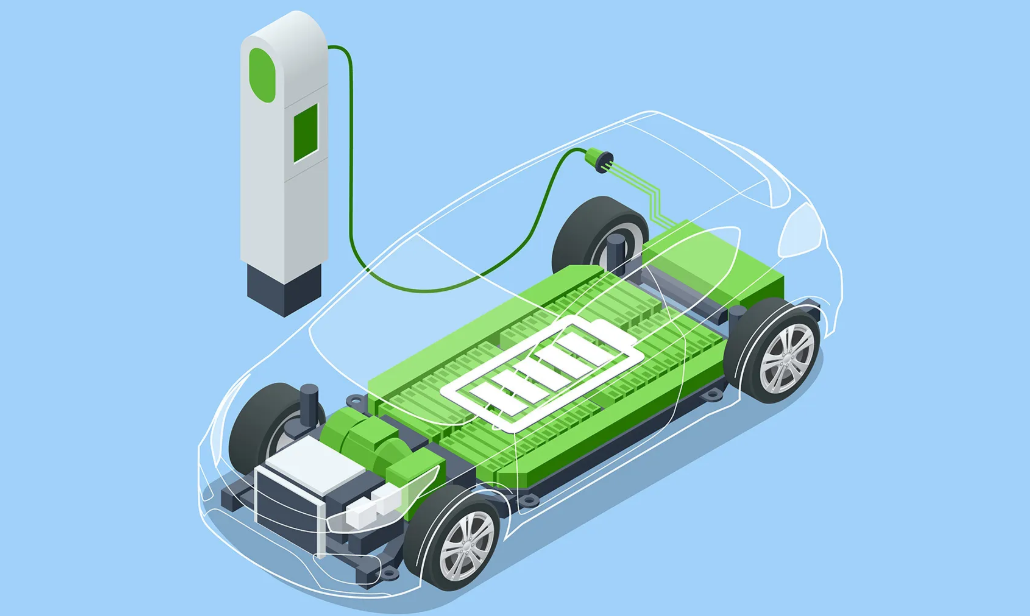
Battery technology has progressed from modest, early cells to high-performance chemistries optimized for energy, power, and safety. The trajectory is data-driven: crystallizing electrode design, electrolyte stability, and scalable manufacturing. Today’s emphasis is on solid-state possibilities, rapid charging, and lifecycle stewardship. Yet tradeoffs persist between cost, density, and thermal management. The next phase promises resilience for grids and mobility, but prudent material choice and policy alignment will shape what comes next.
What Batteries Are Today and Why They Matter
Batteries today enable a broad spectrum of mobile and stationary applications by converting chemical energy into electrical energy with high efficiency and controllable discharge. In contemporary systems, chemistries balance energy density, cycle life, and thermal management to meet diverse demands.
Battery safety considerations govern design and operation, while cost barriers influence adoption rates, infrastructure rollout, and strategic investment in scalable, future-ready energy storage architectures.
The History Arc: From Early Cells to Lithium-Ion
How did a sequence of incremental discoveries culminate in the practical lithium-ion cell that underpins modern energy storage? Early容量 chemistries yielded limited cycle life and energy density, guiding iterative improvements in electrode materials, electrolytes, and architecture.
The historical arc reveals history lessons about design tradeoffs, culminating in higher power density, scalable manufacturing, and durable performance, enabling future, flexible energy systems.
Current Frontiers: Solid-State, Fast Charging, and Beyond
A concise synthesis of present-frontier research shows solid-state chemistries, ultrafast charging pathways, and hybrid architectures poised to redefine energy-density, safety, and lifecycle metrics.
The discussion centers on solid state feasibility, material stability under high-voltage cycling, and scalable fabrication.
Fast charging tradeoffs emerge: higher parasitic losses, interfacial degradation, and thermal management challenges, balanced by energy-density gains and longer cycle life.
Choosing, Storing, and Planning for the Battery-Powered Future
Could the trajectory of energy storage be steered through informed selection, meticulous stewardship, and strategic planning? The discussion evaluates decision frameworks for battery-praxis, emphasizing lifecycle cost, supply-chain resilience, and performance transparency. Decision-support models quantify ethics of autonomy and consumer environmental impact, guiding procurement, storage, and usage. Future planning prioritizes modularity, reuse, and standardized data sharing to optimize broad societal freedom with sustainable energy economics.
Frequently Asked Questions
Will Future Batteries Be Recyclable at Scale and Cheaply?
Future batteries are likely to be recyclable at scale and cheaply, contingent on advancing recycling economics and standardized processes. This trajectory aligns with supply chain ethics, boosted by modular designs, policy incentives, and transparent data sharing for continuous improvement.
How Do Batteries Age at the Molecular Level?
About 20% capacity loss occurs after 1,000 cycles in many Li-ion cells, illustrating aging. The discussion centers on aging mechanisms and electrode degradation, with data-driven projections shaping future-focused strategies for resilience and performance optimization.
Are Energy Density Gains Sustainable or Diminishing?
Energy density gains show signs of tapering as materials approach intrinsic limits, yet incremental improvements persist; sustainability limits depend on cost, safety, and recycling advances, with hybrid chemistries and scalable architectures promising continued progress within defined boundaries.
When Will Ubiquitous Wireless Charging Be Practical?
Charging infrastructure will mature within a decade, enabling rapid user adoption as densities exceed critical thresholds. A notable stat: global wireless charging market projected at 18% CAGR through 2030. The analysis remains data-driven, future-focused, and freedom-oriented.
What Are the Environmental Impacts of Mining for Next-Gen Chemistries?
The environmental impacts of mining for next-gen chemistries include ecosystem disruption, water contamination, and energy intensity, mitigated by eco mining practices and transparent supply chain measures; future data-driven governance aims to minimize footprint while sustaining innovation for freedom.
Conclusion
In a silent grid, batteries stand as patient beacons, cores of potential simmering beneath thin shells. Anode brass and cathode shield, electrolyte rivers, separators as quiet ferries—each element a measured datum in the map of tomorrow. Charge cycles chisel endurance; safety margins temper ambition. As solid-state dawns and fast-charging currents converge, energy density blossoms like a measured sunrise, scalable, trackable. The future illuminates through data-driven stewardship, where performance and longevity synchronize, guiding fleets, grids, and devices toward reliable, decarbonized horizons.